DxO and Topaz rescue the file your converter cannot
DxO's PureRAW and Topaz Photo AI both do one job on files other converters have already given up on.

The case for a one-trick specialist
Every raw converter on the market ships with a noise-reduction slider. Most of them work well enough on a file shot at ISO 800 in decent light. Push to ISO 6400, point at a dark scene, and decent enough stops being good enough — grain crumbles into blotching, detail smears, and the luminance channel that was supposed to carry texture just carries mud. DxO PureRAW and Topaz Photo AI exist for exactly that file.
Both programs operate as pre-processors rather than replacements: you run a raw file (or, with Topaz, a JPEG) through them, get a cleaner file back, and then finish the edit in Lightroom Classic, Capture One, or wherever you already work. The workflow is a detour, not a conversion. The question is whether the detour is worth the entrance fee.
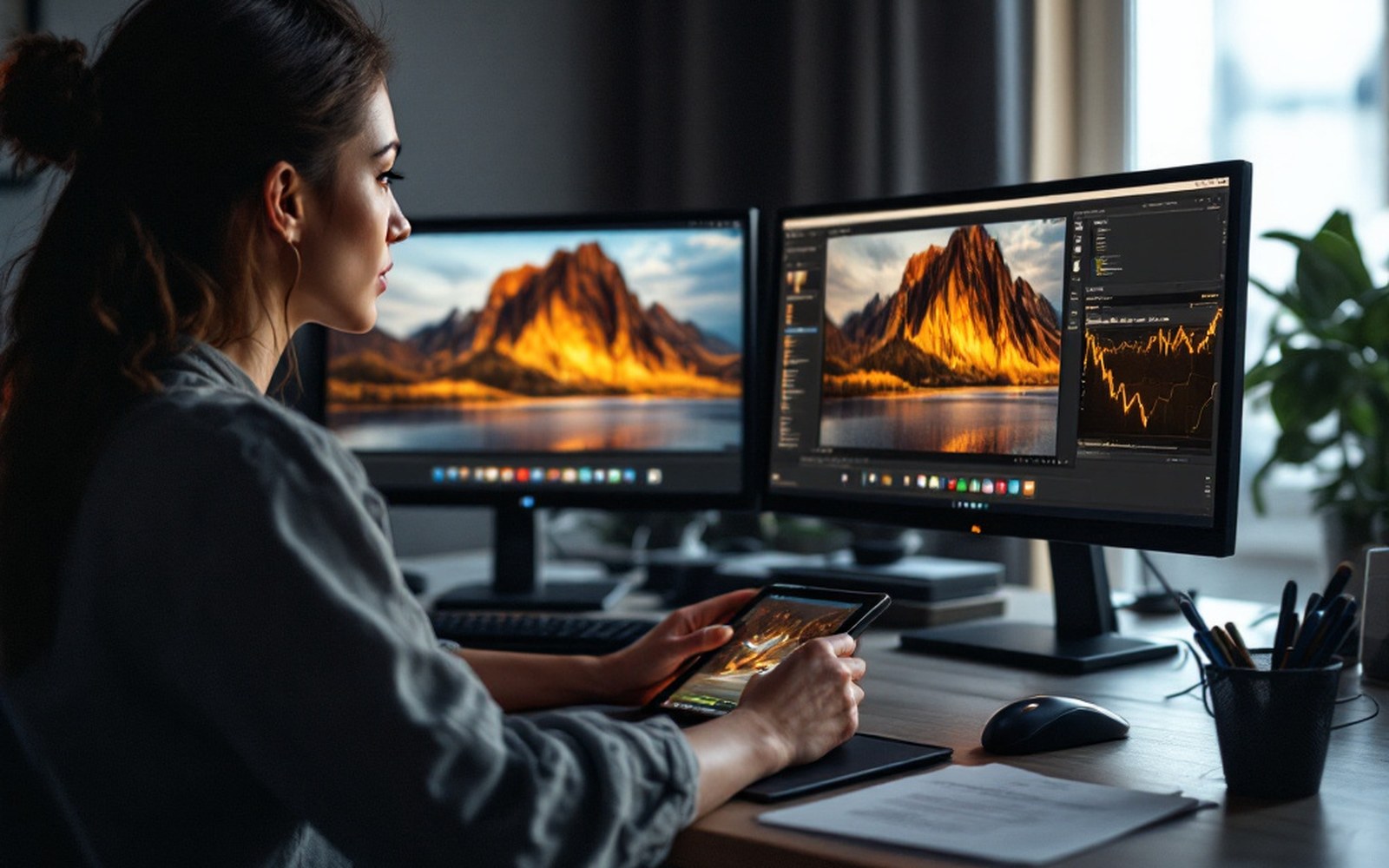
DxO PureRAW 4 (as of early 2025, on DxO's own pricing page) costs around €129 as a one-time purchase, or it arrives bundled inside DxO PhotoLab. Its noise engine, DeepPRIME XD2, was trained on real raw data rather than synthetic noise, and the output is a DNG carrying the corrections. The demosaicing — the reconstruction of colour from a Bayer array or X-Trans sensor — happens inside PureRAW rather than inside the downstream application, which matters: by the time Lightroom Classic sees the file, the difficult work is done. DxO also applies its lens-sharpness modules at this stage, correcting optical softness before the colour edit begins.
Topaz Photo AI takes a different position. It handles noise, sharpening and upscaling under one roof, and it will accept a JPEG as happily as a raw file — useful when the original is already baked. The underlying technology is a convolutional neural network, and Topaz Labs updates the models periodically by pushing new weights through a software update rather than a new version. As of spring 2025 on Topaz Labs' own pricing page, Photo AI costs $199 as a perpetual licence (updates included for one year, then optional). The results on badly focused frames, which PureRAW will not touch, make it the stronger tool for rescue work.
Neither program is the right call for an ISO 400 landscape in flat light. The overhead — time, money, an extra step — is only justified when the output-sharpening and noise-reduction tools inside your main converter have already reached their ceiling. At that point, both programs do what no slider can: they work from a model of how the sensor actually misbehaves, not a general estimate of what noise looks like.
The specialist exists because the generalist stopped early.